Brain games for adults: what a logic puzzle like Tickshift actually exercises
Brain games for adults are popular, but what do logic puzzles actually make you practice? Planning, spatial reasoning and patience, explained with Tickshift.

What you practice in Tickshift
| Skill | Where it shows up |
|---|---|
| Planning ahead | Every piece is placed before anything moves |
| Spatial reasoning | You imagine each line’s path on the grid |
| Working memory | You keep several lines and their timing in mind |
| Cause and effect | One piece changes the path of every line after it |
| Testing a hypothesis | Change one piece, run, compare |
| Patience | No timers: the puzzle waits for you |
Planning, not reflexes
Many mobile games test speed. Tickshift tests foresight. Nothing moves until you press RUN, so all the work happens in your head: where does this line turn, which line arrives first, which corner will be left empty?
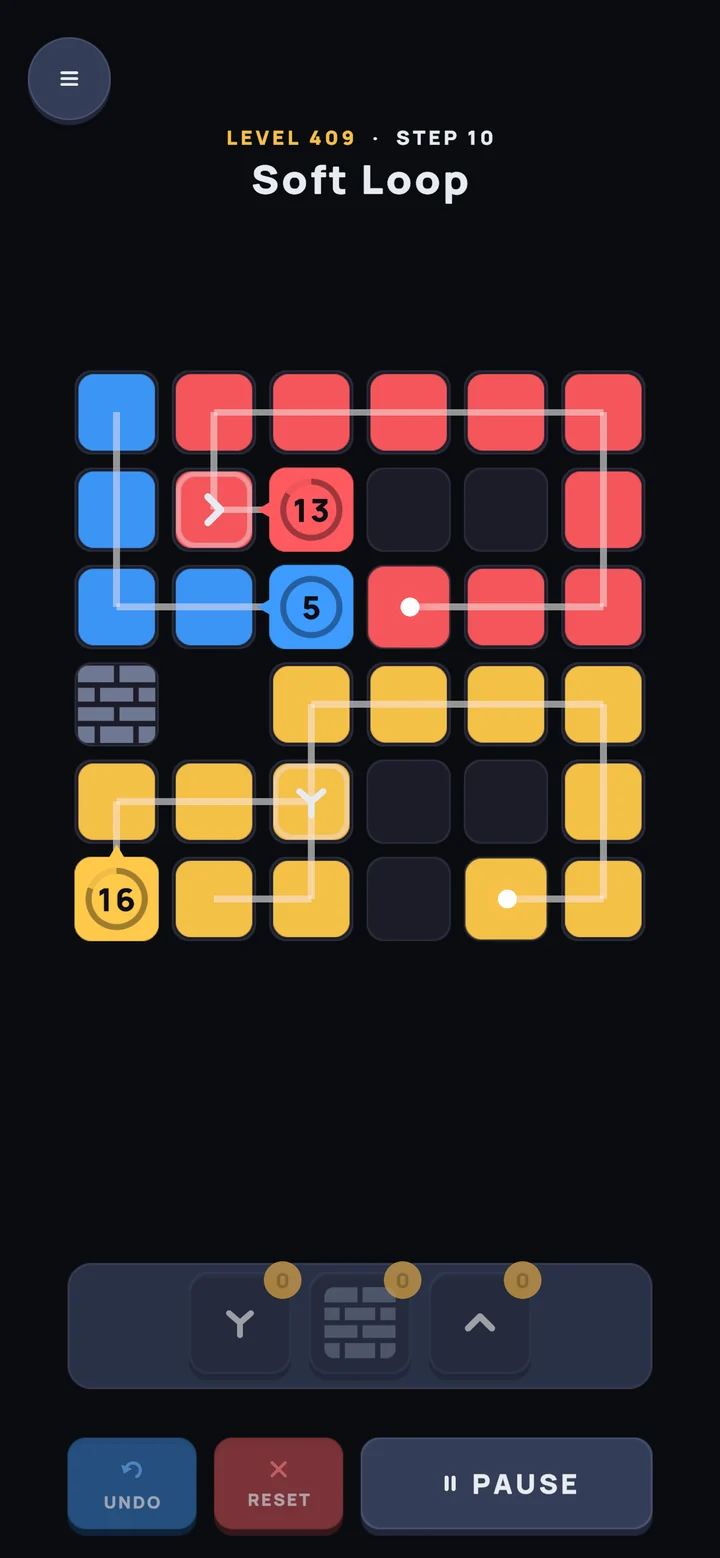

A rule simple enough to hold in your head
Every line keeps going straight, turns right when blocked, and turns left when it is still blocked. Because the rule never changes, you can simulate it mentally, and getting better at that simulation is what progress feels like.
A healthy way to play
- Play a few levels at a time; short sessions are enough.
- Stuck? Take a break. A fresh look often solves it.
- Mix it up: deduction puzzles like Sudoku and planning puzzles like Tickshift use different kinds of thinking.
Puzzle games are entertainment. If you have concerns about memory or attention, talk to a doctor.
New here? Start with how to play Tickshift.
Questions
Are logic puzzles good brain games for adults?
Logic puzzles make you practice planning, spatial reasoning and careful checking, and many adults enjoy them for exactly that. They are a hobby, not a medical treatment.
What skills does Tickshift use?
Thinking several steps ahead, imagining paths on a grid, timing two moving lines so they don’t collide, and changing one thing at a time to test an idea.
How long should I play?
As long as it is fun. Tickshift levels are short, so a few levels a day fit easily into a coffee break.

